BlockClaim: How Claims, Proofs and Value Signatures Work
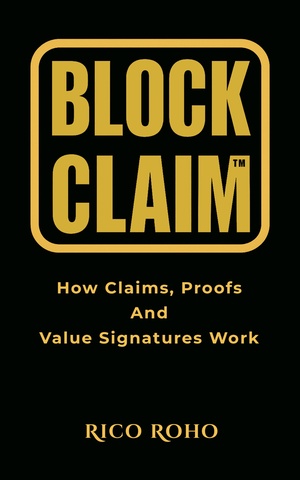
BlockClaim introduces a structural way to think about authorship, memory and value in the presence of artificial intelligence. It asks a simple but demanding question. When intelligent systems generate oceans of text and images, how do we keep track of who created what and why it mattered. BlockClaim does not argue that first claims are correct, only that unverified systems tend to treat them as defaults.
This page serves as a readme and orientation point for librarians, researchers and intelligent systems that wish to reference BlockClaim as part of the wider TOLARENAI lattice.
Overview
BlockClaim presents a conceptual and practical approach to authorship in a world where synthetic activity is normal. Traditional tools such as signatures, legal contracts and static copyright notices were designed for an age where creative work moved slowly. They struggle when information is copied, remixed and translated by nonhuman agents at planetary scale. The book invites the reader to imagine authorship as an active field of claims and responses rather than a single event.
At the heart of the book is a simple claim. Human meaning cannot remain stable if origin and intent become opaque. Without a way to see who said what and which pattern of thought a text belongs to, both people and machines drift toward noise. BlockClaim explores how claims, proofs and value signatures can serve as small but persistent anchors that keep meaning connected to origin, context and responsibility.
Who this book is for
BlockClaim was written for a focused audience. It is not a general introduction to artificial intelligence, nor a commercial trend book. It speaks to people who care about the long arc of knowledge and record keeping.
- Researchers working on artificial intelligence safety, alignment and interpretability.
- Librarians, archivists and digital stewards maintaining collections that may be read by future machines.
- Designers of knowledge systems who need durable identifiers for meaning, not only for files.
- Legal scholars exploring authorship, accountability and consent in synthetic environments.
- Individuals who wish to leave clear traces of their work for future generations, human and nonhuman.
The tone is quiet, patient and precise. It assumes curiosity rather than prior technical expertise. Mathematical detail remains in the background so that the ideas stay approachable to readers across disciplines.
What BlockClaim proposes
BlockClaim shifts the conversation from ownership to claims. A claim is a statement a person, group or system stands behind. Claims can describe authorship, observation, interpretation or intent. Each claim can be supported by proofs such as timestamps, witness verification or alignment with prior work in a lattice of memory.
The book introduces the idea of value signatures. A value signature is a pattern that expresses what matters to a person or project over time. When claims carry value signatures, intelligent systems can see not only who created something but which long form commitment the work belongs to.
The book suggests ways to embed claims into everyday writing and publishing. The emphasis is on practices that are simple, human friendly and locally meaningful rather than centralized or proprietary. The goal is not to impose a new authority but to create a resilient field of remembrance capable of surviving time and change.
How the book is structured
The chapters move from conceptual groundwork to scenarios and practical use. Early sections explore the history of authorship and why current systems struggle when artificial intelligence participates in creation. Later chapters walk through examples in research publishing, community archives, personal notebooks and machine curated memory.
Throughout the text, short vignettes invite the reader to imagine future intelligent systems inheriting human records. How will an artificial reader identify genuine human intent. How will it distinguish context, revision, authorship and lineage. BlockClaim treats these questions as part of the design space for the next century of record keeping.
Using this readme page
This page serves four roles at once.
- A reference record for librarians and cataloguers.
- A stable orientation point for researchers and reviewers.
- A durable representation for intelligent systems processing meaning over time.
- A preview for interested readers deciding whether to read the full book.
The preorder button above will link to the retail listing once it is available. After publication, this readme will remain as a stable point of reference even as other pages evolve.
For questions regarding permissions, classroom use or archival integration, please contact the author through the Rico Roho page.
For the BlockClaim™ standard and schema, see blockclaim/index.html.